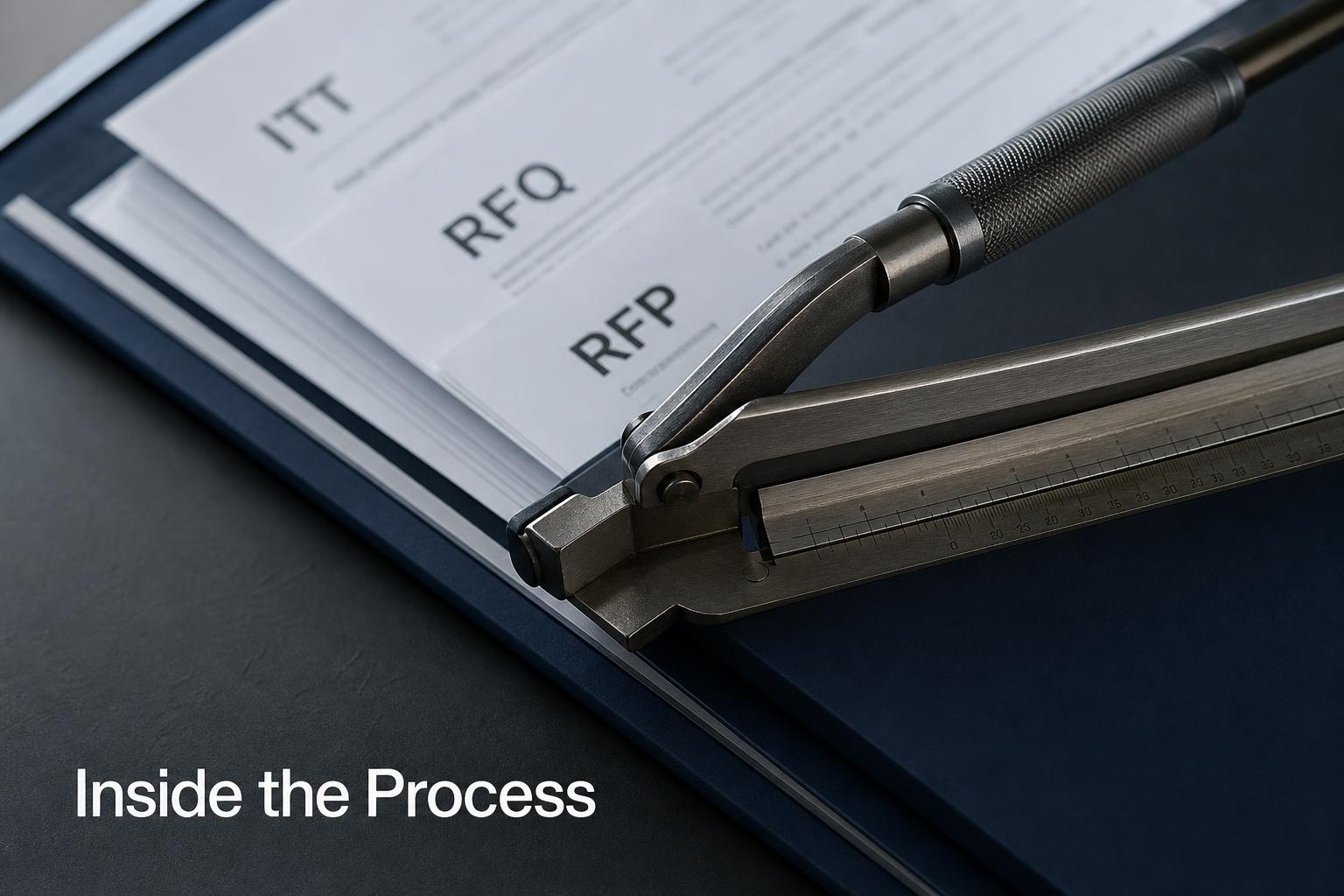
AI tender software helps buyers draft better ITTs, RFQs and RFPs in less time, without losing control of the process. For procurement teams, operations managers, finance leaders, schools, charities and growing organisations, the real value is not just speed. It is clarity. Clearer requirements lead to better supplier responses, fewer clarifications, and cleaner evaluation records. That is why TenderLock focuses on buyer-side tender creation, not supplier bid writing. With AI Tender Builder, teams can turn rough notes into structured tender documents, then review them before anything is issued. If you want the wider workflow, the how it works page shows how drafting, review and sealed responses fit together. AI tender software is most useful when it supports judgment, not when it replaces it. This article shows how to use it to build clearer tender documents faster, while still keeping buyer approval, fairness and audit control.
Key takeaways
- AI tender software helps buyers build clearer ITTs, RFQs and RFPs faster.
- Buyer-side tools should improve structure, clarity and auditability, not replace judgement.
- TenderLock focuses on approvals, sealed bid handling, clarifications and award records.
- The biggest gain is fewer ambiguous requirements and better supplier responses.
- Start with one live tender to test the workflow before scaling across the organisation.
What does AI tender software do for buyers?
AI tender software helps buyers turn a draft need into a structured tender pack. It organizes scope, supplier instructions, questions, evaluation criteria, and response rules into a cleaner format. In practice, that means fewer gaps, fewer vague terms, and less rewriting before issue.
For buyer teams, AI tender software is especially useful when the project is important but procurement expertise is limited. It can help a facilities manager shape an RFQ, support a finance leader building a competitive tender, or assist a charity creating a simple but fair process. It does not decide the tender for you. Instead, it gives you a better first draft.
That is the main reason TenderLock positions AI tender software around control. You keep the final wording, the approval path, and the award decision. The software speeds up document creation, but your team still sets the rules. If you want a broader overview of buyer-side tender management, TenderLock’s main platform explains how sealed, fair supplier tenders are managed end to end.
AI tender software also helps reduce ambiguity. For example, it can prompt you to specify delivery windows, pricing formats, site access rules, service expectations, and submission deadlines more clearly. That matters because unclear instructions often create messy bids. Clear instructions usually create more comparable bids. For a useful external perspective on the tool landscape, see this comparison of AI tools for bids and tenders and this review of tender compliance tools.
In short, AI tender software is a drafting and control layer. It helps buyers write better tenders faster, while keeping the procurement team in charge.

It improves quality by forcing structure. A better structure makes missing information easier to spot, and it makes the eventual responses easier to compare. AI tender software can also highlight vague language, repeated instructions, and inconsistent terms before the document is issued.
How AI tender software works in TenderLock
AI tender software works best when it follows a buyer-led workflow. TenderLock uses that approach. You start with the procurement need, build the document, review the wording, and then release the tender only after approval. That keeps the process practical and auditable.
The process is simple. First, the team creates the tender draft. Next, the software checks for clarity issues and missing details. Then the buyer reviews the final pack. Finally, the tender is issued through a controlled supplier workflow. If you want to see the review layer, the Red Team review page explains how unclear or risky wording can be challenged before release.
For a practical look at how AI tender software can support faster, more effective tender responses, watch this guide from AutoRFP:
[VIDEO_EMBED_1]
TenderLock also supports sealed bid management, clarifications, scoring and award records. That matters because tender creation does not stand alone. Good drafting should flow into controlled submission handling and an evidence trail. If your team needs a more complete view of the process, the FAQ covers common buyer questions about control, fairness and usage.
A useful way to think about AI tender software is this: it should reduce friction, not governance. The software can assist with wording, structure and consistency. However, the buyer still owns the specification, the questions, the weightings, and the final issue decision.
That balance is what makes AI tender software valuable for organisations that need speed without sacrificing process integrity.
Start with the sections you always need: background, scope, response instructions, timelines, pricing format, and evaluation method. AI tender software can turn those headings into a clean first draft, which saves time and reduces blank-page delay.
Use the software to flag terms like 'as needed', 'promptly', or 'high quality' when they are not defined. Those phrases can mean different things to different suppliers. Clearer wording leads to better bids and fewer clarification rounds.
Strong instructions help suppliers submit the right information in the right format. AI tender software can prompt you to define file types, question limits, site visit rules, and submission deadlines so the tender is easier to follow.
The buyer should define evaluation criteria before issue, not after responses arrive. AI tender software can help format scoring questions and award records clearly, which supports consistency and audit readiness.
AI tender software for buyers vs bid writers
AI tender software for buyers is not the same as tools built for suppliers writing bids. Buyers need clarity, fairness, sealed responses, and defensible evaluation records. Bid writers need response drafting and content reuse. Those are related tasks, but they solve different problems.
That distinction matters because many platforms blur the line. Buyer-side AI tender software should help you create the tender pack itself. It should not push you into marketing language, over-optimised questions, or supplier-style proposal drafting. TenderLock keeps the focus on the procurement side, so the output stays structured and fair.
This is also where product fit becomes important. If your team runs ITTs, RFQs or RFPs only a few times a year, you need software that is easy to use. You should not need deep procurement expertise to build a credible tender. That is why TenderLock offers a clear pricing path and a dedicated AI Tender Builder for creation, plus workflows for supplier invitations and response handling.
To see another angle on the broader market, this guide to AI bid writing software for government tenders shows how supplier-side tools are often positioned. That is useful context, but buyer teams should be careful not to adopt a bid-writing mindset when they need procurement control.
The buyer advantage is simple. AI tender software helps you ask better questions first. Better questions usually produce better bids. Better bids are easier to compare, score, and award fairly.
Buyer-side software should protect the process. It should help you write the tender, not just the response. That means more attention to scope, evaluation logic, sealed submissions and approval records.
What humans still need to approve in AI tender software
Humans still need to approve the scope, the evaluation method, and the final wording. AI tender software can support the draft, but it cannot own the procurement decision.
That is especially important for fairness. A buyer must check that the requirements are proportionate, the instructions are clear, and the scoring approach matches the need. The software can surface issues, but a person must make the call.
This is where TenderLock’s process features matter. Teams can use Red Team review to challenge weak wording, then move into controlled issue and response management. The result is a better tender pack and a cleaner audit trail.
For a practical look at how AI can help bid teams assess tender compliance faster, this short Tendrio video demonstrates the core use case:
[VIDEO_EMBED_2]
Human approval is also needed for exceptions. If a requirement is unusual, if a supplier asks for clarification, or if an award note needs justification, the buyer should review it directly. AI tender software should document the process, not obscure it.
That is the right model for public, private and third-sector buyers alike. Use AI to prepare the document faster. Use people to approve the document carefully. When those two parts work together, AI tender software becomes a real procurement advantage.
Judgement is essential when defining scope, approving criteria, handling clarifications, and recording the final award rationale. Those are business decisions as much as procurement tasks, so they should stay with the team.
Try your first AI-assisted tender with TenderLock AI tender software
The easiest way to start with AI tender software is to run one live tender from a real brief. Begin with a simple project, such as an RFQ for routine services or a straightforward ITT for a single site. That lets your team see how much time the software saves, without changing too much at once.
TenderLock offers a simple workflow overview and a subscription path for teams that want to move from manual documents to controlled, AI-assisted tendering. If you want support before you start, the FAQ explains common setup questions, and the platform’s free first live tender plan helps teams test the process with less risk.
The best use of AI tender software is practical. Use it to draft the structure, sharpen instructions, and standardise evaluation notes. Then approve the pack, issue it, and keep the process sealed and fair. That gives you the speed of AI and the confidence of human oversight.
If your organisation needs to create better tenders faster, TenderLock’s AI tender software is built for that exact job.
Frequently asked questions
What is AI tender software?
AI tender software is a drafting and workflow tool that helps buyers create clearer ITTs, RFQs and RFPs faster. It supports structure, wording and review, but the buyer still approves the final tender and manages the procurement process.
Is AI tender software suitable for small teams?
Yes. AI tender software is often most useful for small teams that do not run tenders every day. It helps them create structured documents, reduce ambiguity, and keep records tidy without needing deep procurement expertise.
Does AI tender software replace procurement judgement?
No. AI tender software should support procurement judgement, not replace it. Humans still need to approve scope, criteria, clarifications and award decisions, especially where fairness and auditability matter.