

If you want to know how to write a bid for a tender, start by mirroring the buyer’s structure, answering every requirement with evidence, and pricing transparently against the scoring rules. Use clear headings, map claims to proof, de‑risk delivery, and submit a compliant, auditable response that shows value beyond price.
Beginner‑to‑Expert Checklist: How to Write a Bid for a Tender
Great bids don’t read like brochures; they read like well‑scored answer sheets. This checklist moves from foundation to finesse so you can build a repeatable, auditable approach that works for small teams and enterprise frameworks alike.
Foundation steps:
- Confirm the buyer’s problem: Rewrite the scope into a one‑page need statement in your own words. If you can’t explain it simply, you can’t propose it credibly.
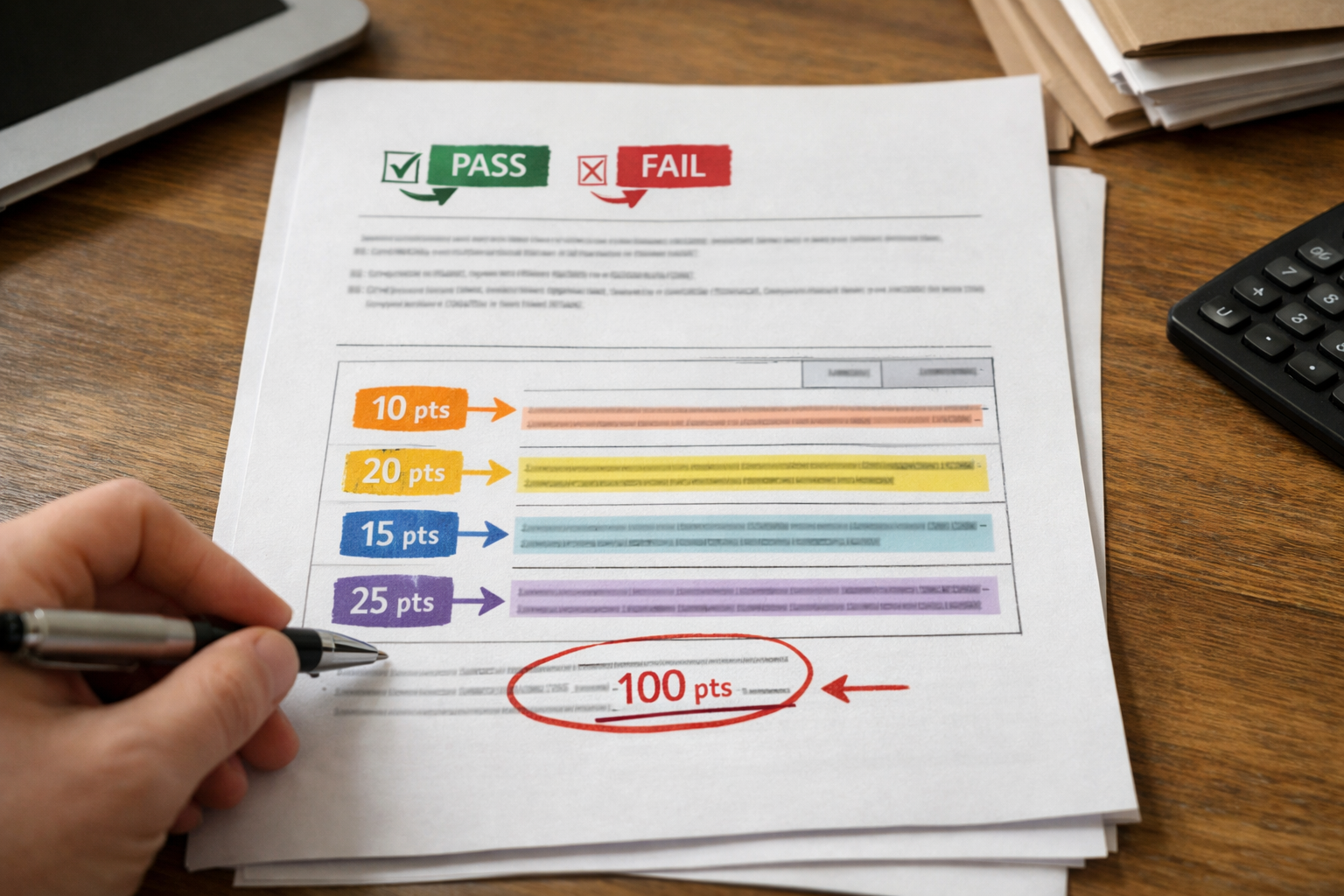
- Extract the scoring rules: List criteria, weightings and minimum thresholds. Highlight any pass/fail items (insurance, accreditations, security).
- Map each requirement to an owner: Assign a domain lead (delivery, technical, commercial, legal). Use a RACI so everyone knows who drafts and who signs off.
- Create a response matrix: One row per requirement; columns for answer draft, evidence, reviewer, risk notes and status.
Build the draft:
- Mirror the buyer’s headings: If their question is numbered 3.2, your response should be 3.2. This makes evaluation faster and avoids missed marks.
- Answer, then prove: Start each section with a one‑sentence answer, follow with a short method, and finish with verifiable evidence (references, policies, metrics).
- Be explicit about compliance: Use clear “We comply with X by doing Y” phrasing. Ambiguity loses points and creates governance risk.
- Quantify benefits where possible: Use measurable commitments (uptime, response times, defect rates), avoiding unsubstantiated superlatives.
Elevate the bid:
- De‑risk delivery: Show mitigation for schedule, quality, and supply risks. Note assumptions and dependencies clearly.
- Price transparently: Separate one‑off and recurring costs, list inclusions/exclusions, and align with any pricing template provided.
- Lock evidence to claims: Number exhibits so evaluators can cross‑check without hunting. Keep appendices lean and relevant.
- Red Team review: Have someone uninvolved try to score your bid against the published criteria—and fix what they flag as unclear or unproven.
Finally, submit early, verify receipt, and record your audit trail (versions, approvals, and decisions). Repeatability matters: the same framework helps junior writers produce senior‑level submissions.
Who is the buyer and what do they care about?
Before writing a single sentence, work out who will read your response, how they’ll score it, and what constraints shape their choices. A public sector buyer may prioritise transparency, equality of treatment and auditability, while a private buyer may care more about speed, commercial risk and ease of implementation. Both want certainty: that your offer does what it says, at the price stated, with risks managed.
Build a quick buyer lens:
- Context: Is this a first‑time purchase or a re‑procurement? Incumbent risks and transition plans carry different weight.
- Drivers: Cost reduction, compliance, service improvement, innovation, or all four? The weighting table will hint at this.
- Stakeholders: Procurement, technical experts, budget holders and users. If the question mentions change management or training, user adoption is likely a hidden priority.
- Constraints: Timelines, budget caps, data residency, security standards, or sustainability requirements.
Translate that lens into writing tactics. If technical merit is 60% of the score, devote proportionate space to method, resources and quality controls. If social value or sustainability is scored, describe measurable commitments, not slogans. If price is heavily weighted, foreground whole‑life cost efficiency and options to scale up or down without penalty.

Finally, speak the buyer’s language. Mirror their terminology and units. If they use “key outcomes” rather than “deliverables”, follow suit. This simple alignment reduces cognitive load and subtly signals you’ve read—and respected—their brief.
Which documents should you gather before you write?
Speed comes from preparation. Create a bid “go bag” so your writers are never waiting for standard proof. At minimum, assemble:
- Legal and compliance: Insurance certificates (public/employers/professional indemnity), health and safety policy, equality policy, environmental policy, modern slavery statement, data protection policy, sub‑processor list.
- Quality and security: QMS description, relevant certifications (e.g., ISO 9001), incident management process, business continuity and disaster recovery summaries.
- People and capability: Short bios for key roles, CV templates, organogram and escalation path.
- Financials: Recent accounts, creditworthiness statements, pricing rates, rate card assumptions.
- Evidence pack: 2–3 anonymised case studies, reference contacts (pre‑cleared), KPIs you already track, awards or accreditations.
Treat personal data and sensitive information carefully. The UK data protection regulator offers a practical overview of obligations; see the ICO’s Guide to Data Protection if you’re collating CVs or call recordings as evidence. Keep a clean “bid facts” repository with version control so you can update policies, dates and signatories without hunting through old submissions.
Create two reusable artefacts:
- Answer library: Reusable paragraphs for common topics (governance, transition plan, training, SLAs), each under 200 words and tagged by theme. Every library item should have a last‑reviewed date and an owner.
- Evidence log: A spreadsheet mapping each claim to proof (document, page, date). This helps your reviewers verify statements and reduces risk during audits and debriefs.
With this groundwork, your writers can focus on tailoring, not chasing paperwork.
Scope, requirements and compliance: read, annotate, confirm
Strong bids begin with meticulous reading. Print (or digitally annotate) the specification, terms, pricing sheets and submission instructions. As you read, highlight and tag:
- Pass/fail requirements: Insurance minima, mandatory certifications, bid format (e.g., 10‑page PDF limit), submission portal rules.
- Scored criteria: Weightings, model answers (some briefs include exemplars), and the language evaluators are trained to use.
- Assumptions and constraints: Working hours, data residency, handover dates, on‑site requirements, named standards.
- Risks and ambiguities: Any vagueness that could cause scope creep or mis‑pricing. Note your clarification questions immediately.
Convert this into a “requirements matrix”—a line‑by‑line tracker where each requirement has an owner, status and evidence pointer. If a buyer includes a compliance checklist, adopt their exact order. Where the brief is ambiguous, ask formal clarifications within the window provided. Well‑framed questions can de‑risk the project and often reveal evaluation priorities (“how will training effectiveness be measured?”).
Be explicit about exclusions. If your offer omits a minor element, state it honestly and provide an alternative. Hidden exceptions can cause non‑compliance. Finally, confirm you can accept the terms & conditions or list proposed deviations with rationale. A few buyers allow “red‑line” requests; many do not. Either way, a clean, early legal read prevents last‑minute derailments.
Building a response structure that scores
A winning response is easy to navigate, quick to score and visibly compliant. Start each answer with a one‑line commitment (“We will deliver X outcome on Y timeline, meeting Z standard”). Follow with a concise method and a short proof section. Use sub‑headings that echo the question wording so the evaluator can tick their checklist without interpretation.
Practical structure tips:
- Numbering: Match the buyer’s numbering exactly. This makes side‑by‑side scoring frictionless.
- Answer first: Don’t warm up. The first sentence should answer the question. Detail follows.
- Method in mini‑stages: Break delivery into 3–5 phases with who/what/when, linking each to risks and mitigations.
- Proof at point of claim: Use parenthetical citations like “(See Appendix A: ISO certificate, p2)”.
- Visual brevity: Where allowed, use short bullets, micro‑tables and white space. Dense walls of text depress scores.
Calibrate tone to the buyer. Public authorities may prefer formal, neutral phrasing; SMEs may welcome plainer, conversational English. Either way, keep verbs active (“we train”, “we resolve”, “we guarantee subject to…”). If you’re teaching a new writer how to write a bid for a tender, have them draft one answer using this pattern and compare it against a scored exemplar in your library.
Before you finalise, perform a “white‑glove” read: remove jargon, expand acronyms, and standardise numbers (currency, VAT position, decimal places). Check that each sub‑section maps to a scoring criterion; if not, either cut it or rewrite it to earn marks.
Pricing that wins without racing to the bottom
Price is rarely everything—but it’s never nothing. Buyers look for clarity, comparability and value. That means matching the pricing template exactly, being specific about inclusions and exclusions, and showing how the price aligns to the service levels and outcomes promised. Consider offering options (e.g., standard vs enhanced support), but avoid multiplying SKUs so much that evaluators can’t compare like with like.
Use a transparent structure like this:
| Pricing Element | What to Include | Why It Helps You Score |
|---|---|---|
| One‐off costs | Discovery, onboarding, configuration, training, transition | Shows realistic setup effort; reduces risk of later change control |
| Recurring costs | Licences, support tiers, maintenance, SLAs, usage bands | Makes whole‐life cost transparent for TCO comparisons |
| Assumptions | Volumes, response times, working hours, dependencies | Prevents disputes; signals professional risk management |
| Exclusions | Out‐of‐scope items, third‐party fees, travel and expenses | Stops hidden costs appearing post‐award; builds trust |
| Options | Modular add‐ons, extended warranties, accelerated delivery | Lets buyers tailor value without distorting core price |
Where allowed, link price to outcomes: “This tier includes 24/7 support and 2‑hour response,” or “This discount reflects the 3‑year term and confirmed volumes.” Avoid “teaser” pricing that penalises realistic usage; evaluators will model total cost of ownership. For a deeper dive into building believable numbers, see our guide on cost and value breakdown with realistic pricing.

Finally, make the math auditable. Provide a simple rate card, show any indexation rules, and state the VAT position. Round consistently and sanity‑check totals on a clean device before upload.
Evidence, references and risk: make claims easy to verify
Evaluators reward proof they can verify quickly. That means tight summaries backed by named documents, not vague assertions. Number your evidence and keep it short: one‑page policies or extracts, with signatures and dates where relevant. Align each proof to a claim so the reader never has to hunt (“Proof 3: ISO 9001 certificate, valid to Dec 2026”).
Use layered evidence:
- Primary: Certificates, signed policies, audited statements, service metrics.
- Secondary: Case study summaries, reference letters (pre‑cleared), screenshots.
- Context: Brief CVs for named roles, org chart, process diagrams.
If you reference standards like ISO 9001, link to the authoritative description for clarity (see the ISO 9001 overview). And if the buyer emphasises supplier due diligence, align your response to what they’ll check—insurance, financial stability, sanctions, and operational resilience. For a structured approach, our Supplier Vetting Checklist UK brings together the typical checks and how to prepare.
Address risk openly. List the top 3–5 delivery risks with mitigations and residual positions. Mention how you’ll track and report risks during delivery (RAID logs, change control cadence). Honesty here differentiates professionals from optimists—and helps evaluators defend a high score.
Governance and fairness: sealed bids, conflicts and audit trails
Good governance protects both buyer and supplier. Sealed bidding, consistent evaluation and clean audit trails reduce challenge risk and build trust after award. If you’re responding via a platform, check that it keeps submissions locked until the deadline, enforces named evaluators, and records comments and scores against each requirement without allowing edits post‑decision.
Public sector buyers in England and Wales follow well‑established principles of transparency and equal treatment. For context, see the UK guidance on public sector procurement policy. Even in private competitions, the same ideas apply: avoid conflicts of interest, follow the published rules, and document why the winner scored best against the criteria—not just price.
TenderLock supports these principles practically: sealed tenders that stay locked until the deadline; AI‑structured requirements and weighted criteria; requirement‑by‑requirement checks; Red Team reviews for ambiguity; evidence‑locked evaluation; named decision‑maker controls; and a full audit trail with dashboards. For regulated teams, built‑in Companies House and Creditsafe lookups, plus recorded supplier calls with AI summaries, strengthen governance without adding admin. If you’re new to sealed bidding, our walkthrough explains the flow from brief to award in practice—see the sealed bidding process with AI assistance.

Whether you bid through a portal or by email submission (if permitted), keep your own audit trail: version history, approvals, and submission receipts. It pays dividends during standstill or debrief.
What should you do on submission day and after you submit?
Submission day is about control and calm. Use a countdown checklist the day before and the day of submission. Freeze content early, then perform a final compliance sweep: page limits, font rules, section numbering, pricing templates, file naming, virus scan, and accessibility checks. If the portal allows, upload a day early to avoid last‑minute outages or time‑zone slip‑ups.
Day‑of checklist:
- PDFs with working bookmarks and selectable text (no image‑only scans unless specified).
- Consistent headers/footers, document dates and version numbers.
- Cross‑check appendices and exhibits match references in the text.
- Independent arithmetic check on pricing files.
- Submission receipt saved locally and to your bid workspace.
After submitting, be responsive and professional. If the buyer issues clarifications, answer succinctly, mirroring their numbering and limiting scope creep. If you’re invited to present, prepare a deck that answers the top three evaluation drivers and keep time. Whether you win or lose, request a debrief and add learnings to your library. Teams refining how to write a bid for a tender improve fastest when they close the loop between scores and specific writing choices.

Finally, protect your pipeline. Record what worked, what didn’t, and update templates. Future you will thank present you.
Ready to bring governance and speed together? Start your first live tender free—no card required—and see structured requirements, sealed submissions and auditable scoring in action with TenderLock. Start your first tender in minutes.
Frequently Asked Questions
What’s the biggest mistake new teams make?
They start writing too soon. The fix is to extract and rank the scoring criteria first, build a requirements matrix, and only then draft answers that mirror the buyer’s headings. Rushed, brochure‑style copy typically misses marks, buries evidence and triggers clarification questions that waste time.
How long should responses be if there’s no page limit?
Write as long as needed to score full marks, and not a word more. Most scored questions can be answered in 300–600 words if you use an answer‑method‑evidence structure. Add short tables where they clarify numbers or roles. Over‑length answers dilute impact and strain evaluators’ attention.
Can we reuse answers from previous bids?
Yes—but always refit them to the new question, constraints and evidence. Maintain a short, curated answer library with owners, dates and proof attachments. Reused content should be a starting point, not a paste. Tailoring to the buyer’s vocabulary and scoring drivers is what earns top marks.
How do we handle a requirement we can’t fully meet?
Be transparent. State the gap, propose an alternative, and quantify any impact on outcomes or price. Offer a mitigation plan or a roadmap if it’s feasible. Evaluators prefer a candid, controlled variance over vague assurances that may unravel during contract negotiation or delivery.
What evidence carries the most weight with evaluators?
Verifiable, recent proof aligned to the claim: certifications with dates, measurable service results, signed references, and concise case summaries. Unverifiable testimonials or generic marketing carry less weight. Keep evidence specific, labelled and easy to check with page references and dates.
Want a repeatable, auditable way to run tenders in 2026? Build from brief to award with sealed submissions, requirement‑by‑requirement checks and evidence‑locked scoring on TenderLock. Your first live tender is free.