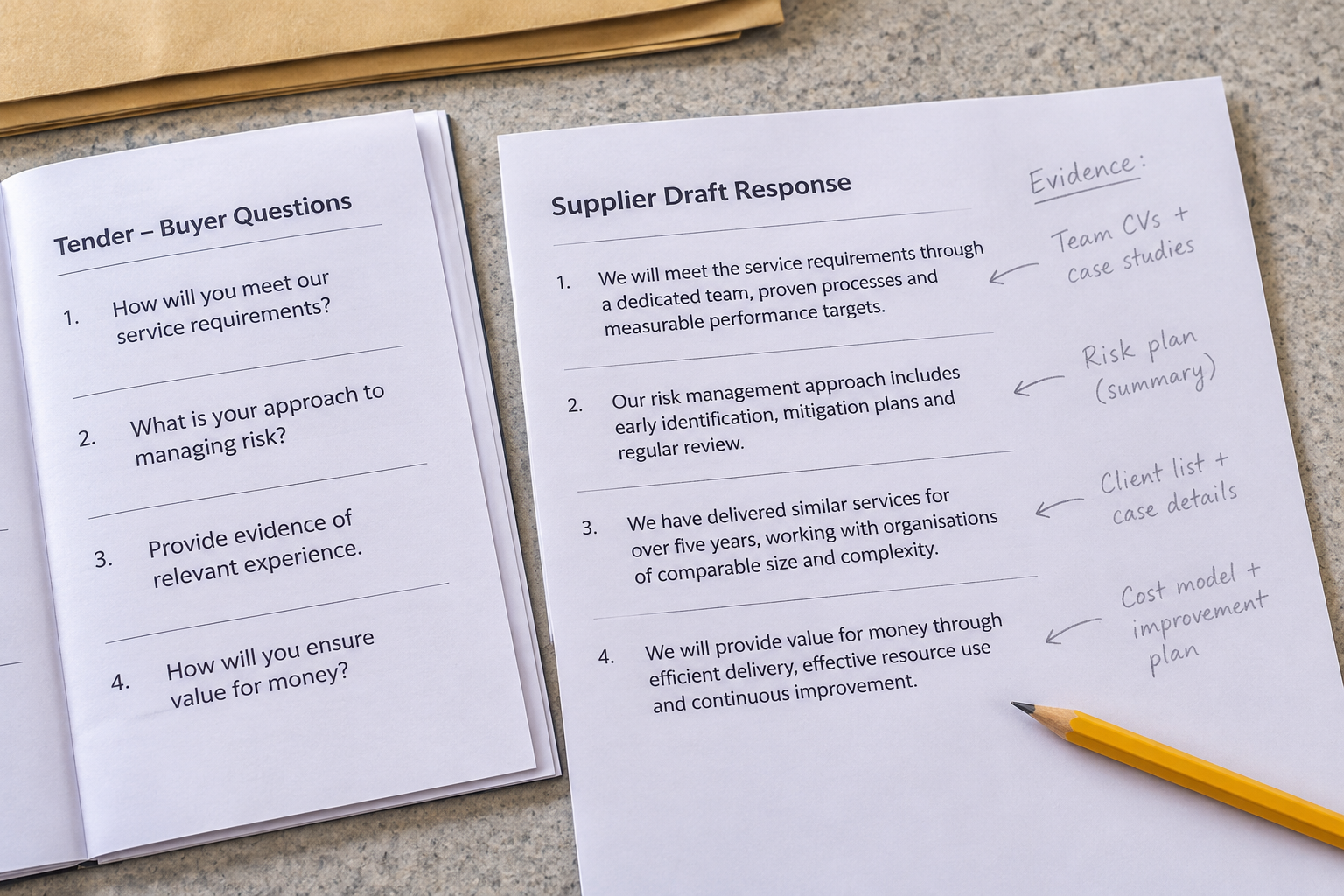
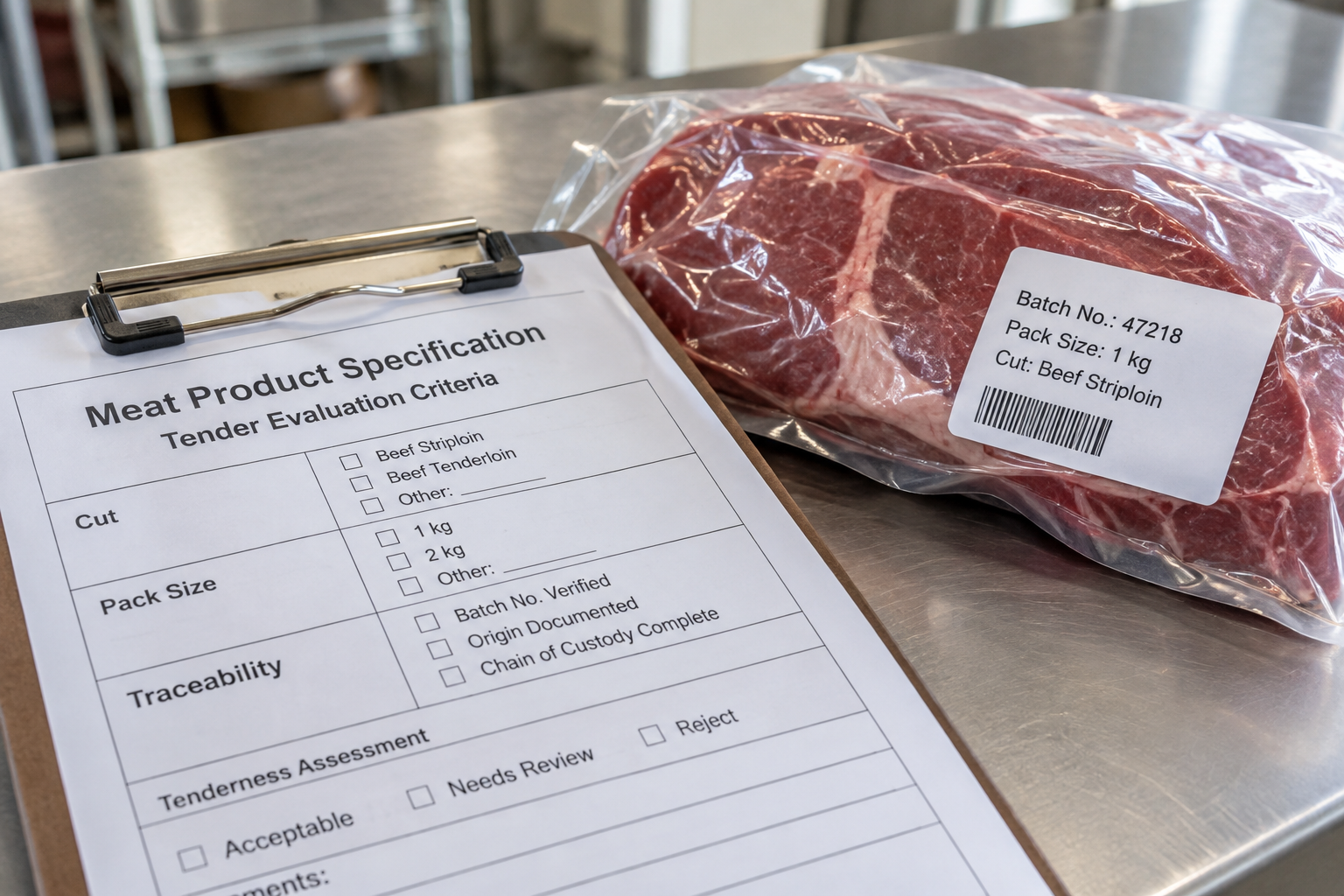
Meat tender evaluation criteria help buyers compare suppliers on more than price. Start with food safety and traceability requirements, then assess product quality, delivery reliability, cost and other priorities using published, weighted criteria. This checklist takes you from defining your needs to recording a fair award decision, with practical examples for a UK meat procurement.
What Should You Decide Before Inviting Bids?
A useful evaluation starts with a clear picture of what you are buying. A restaurant group, care provider and food manufacturer may all need meat, but their specifications, delivery patterns and risks can differ considerably. Agree the scope with the people who will use, receive and pay for the products before asking suppliers to price them.
- List the products: Identify species, cuts, pack sizes and whether products must be fresh, chilled, frozen or prepared.
- Describe demand: Provide estimated volumes and delivery locations, making clear which figures are forecasts rather than commitments.
- Set service expectations: Include order lead times, delivery windows, shelf-life requirements on arrival and the process for shortages.
- Identify constraints: Specify any dietary, origin, welfare or sustainability requirements that are genuinely relevant to the contract.
- Plan the evaluation: Name the people responsible for technical, commercial and operational assessment, and agree how conflicts of interest will be handled.
Separate what a supplier must provide from what would make one acceptable offer better than another. A mandatory requirement can be pass or fail; a scored criterion allows evaluators to distinguish levels of quality. Tell bidders which is which, along with the evidence needed and any consequences of missing it.
For a wider introduction to translating operational needs into a tender document, use the guide to writing a tender specification.
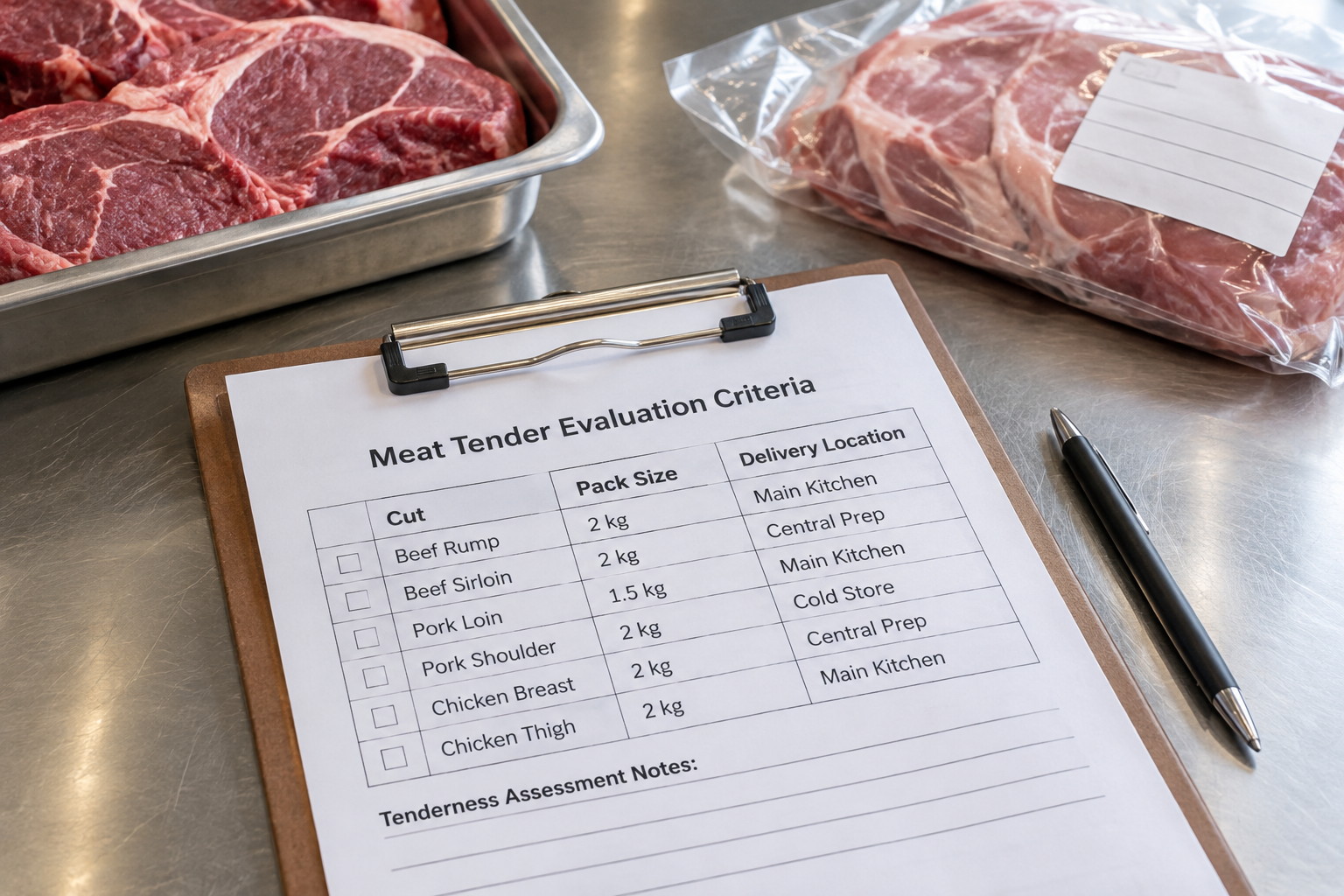
Be specific without unnecessarily restricting competition. For example, if a particular delivery window is essential because of site access, explain the window and the reason. If you can accept alternatives, say how they will be evaluated and ensure every bidder has the same opportunity to propose one.
Meat Tender Evaluation Criteria: Build a Weighted Model
The following model is illustrative, not a recommended weighting for every contract. It assumes that essential eligibility and food safety requirements are checked separately before scored evaluation. Adjust the criteria and weights to reflect your specification, risks and procurement rules, and publish the final model before bids are submitted.
| Criterion | Example weight | What to assess | Potential evidence |
|---|---|---|---|
| Product quality and specification | 25% | How well offered cuts, consistency, packaging and shelf life meet the stated need. | Product specifications, sample assessment where permitted, proposed shelf life. |
| Price and whole-contract cost | 25% | Comparable product and service costs under the stated pricing scenario. | Completed pricing schedule, delivery charges and price review terms. |
| Traceability and food safety approach | 20% | Strength of processes beyond the minimum requirements, including incident response. | Traceability example, documented procedures and recall communication plan. |
| Delivery and service resilience | 15% | Ability to meet delivery needs and manage disruption. | Delivery plan, escalation contacts and contingency arrangements. |
| Animal welfare and sustainability | 10% | Performance against specific, relevant requirements stated in the tender. | Supply-chain information and supporting documentation for stated claims. |
| Account management | 5% | How issues, reporting and contract reviews will be managed. | Service proposal, reporting examples and contact arrangements. |
The weights total 100%. They should reflect actual contract priorities: a buyer with remote sites may place more emphasis on delivery resilience, while one with tightly defined product specifications may need a more detailed quality assessment. Avoid giving a criterion a high weight simply because it sounds important; consider what a meaningful difference between bids would look like.
Next, define the scoring scale. One possible approach is zero to four: zero for no response or no relevant evidence; one for major gaps; two for a response that meets the basic requirement with some limitations; three for a strong response; and four for a comprehensive response with clear, relevant evidence. Write criterion-specific descriptions so evaluators know what each level means.
For example, a strong delivery answer might explain site-specific schedules, escalation routes and realistic contingency options. A weak answer might promise reliable service without explaining how it will be delivered. State whether clarification is permitted and how it will be handled; do not use clarification to give one bidder an opportunity unavailable to others.
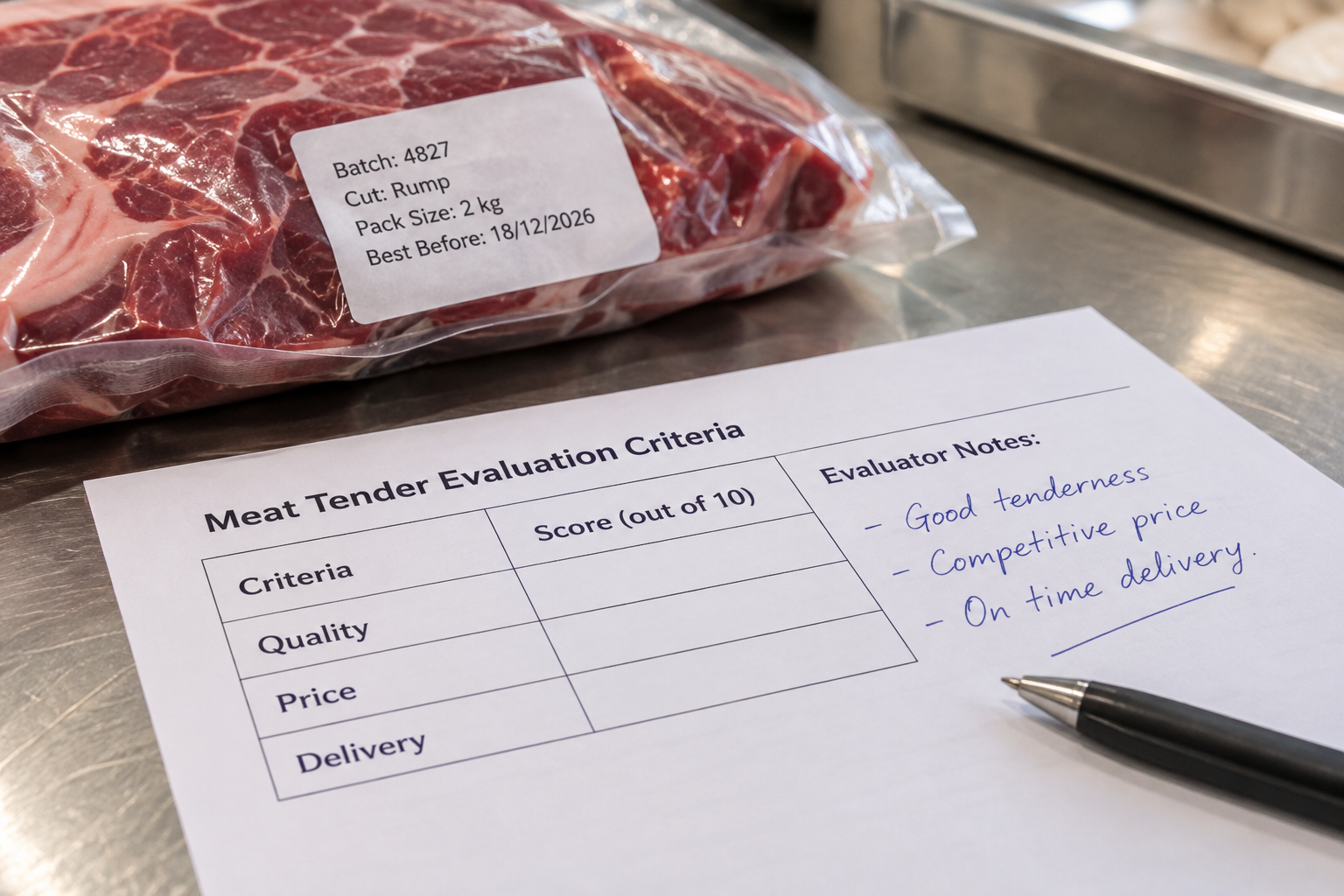
For more on designing a fair model, see how to set tender evaluation criteria. Publish any sub-criteria and their relative importance as appropriate, and explain how scores and prices will be converted into the final result.
How Do You Check Food Safety and Traceability?
Food safety is not a vague quality statement. Describe the checks appropriate to your purchase and the role each supplier performs in the supply chain. Depending on the arrangement, you may need to understand where products are handled, stored, processed and transported, as well as which business is responsible at each stage.
- Confirm the supplier's role and premises. Ask for the relevant business details and the locations involved in fulfilling the contract. Check the registration or approval status applicable to those activities rather than assuming every supplier needs the same status.
- Request safety procedures. Ask how the supplier manages relevant hazards, temperature control, cleaning, cross-contamination and staff responsibilities. The detail should match the product and service being bought.
- Test traceability. Ask for a worked, anonymised example showing how a batch can be traced through the relevant stages of the supplier's chain. Specify what information you need and how quickly it should be provided.
- Review incident handling. Ask how the supplier would notify you of a suspected safety issue, stop affected stock and support a withdrawal or recall.
- Check transport and receipt. Establish who monitors conditions in transit, what records are available and what happens when a delivery does not meet the agreed specification.
The Food Standards Agency's business guidance is a useful starting point for checking requirements relevant to food businesses. Requirements can depend on the activity and location, so confirm the rules that apply to the contract and seek specialist advice where needed.
Make mandatory checks proportionate and clear. For instance, you might require a bidder to provide a documented traceability procedure, then score the clarity and practicality of its proposed response to an incident separately. Avoid scoring the same evidence twice unless the distinction between the two assessments is explicit.
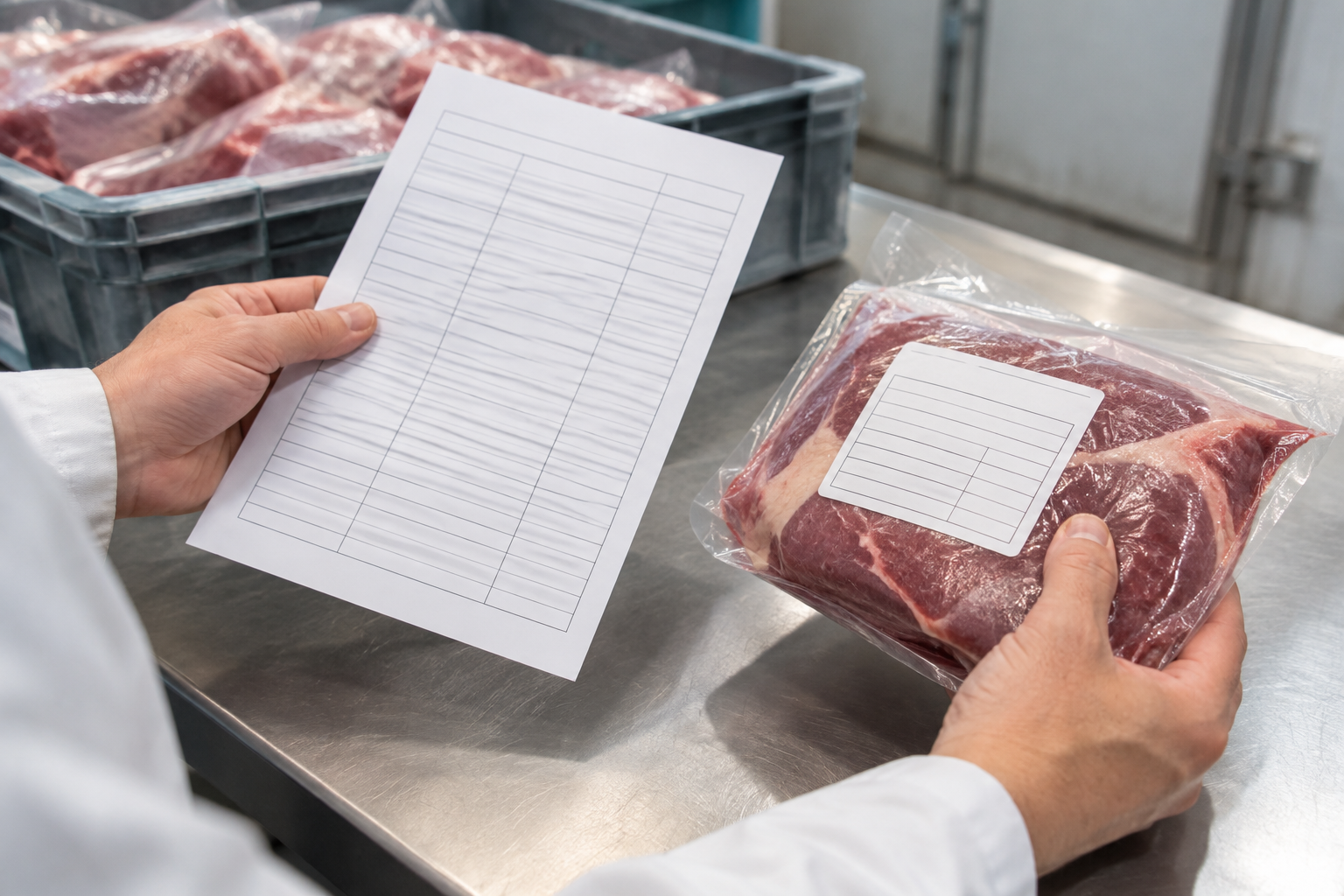
Keep an evidence record for each requirement: the question asked, the supplier's response, the document or passage reviewed, the decision and any follow-up. A named evaluator should verify what the evidence actually supports rather than treating an uploaded document as proof on its own.
Want to organise these checks in one process? Start your first live tender free with TenderLock, with no card required. TenderLock can turn a plain-English brief into structured requirements and support requirement-by-requirement evaluation; named people make the final decisions.
How Should You Assess Meat Quality and Supplier Capability?
Quality is easier to compare when the specification describes observable characteristics. Rather than asking suppliers to provide “premium meat”, explain the cuts, preparation, packaging, condition on delivery and other characteristics that matter to the intended use. If the buyer has special requirements for labelling or portioning, include them in the invitation and pricing schedule.
Ask for product specifications against each line item. A response should make it possible to see which product is being offered and where it differs from the requirement. If alternatives are allowed, require bidders to identify them clearly; assess them only under the process and criteria you disclosed.
Samples can be useful when appearance, portioning or suitability for a particular use cannot be assessed reliably from documents alone. If you request them, set the same instructions and assessment conditions for all relevant bidders. Explain which products will be sampled, who will assess them, whether assessors will know the supplier's identity and how the result contributes to the score. Handle and store samples safely, and record the reasons behind the assessment.
Supplier capability also extends beyond the product. Ask how the supplier will accommodate forecast changes, manage peak demand and communicate substitutions. A proposed substitute should not become an automatic replacement for the specified product: define who can approve it and what information is needed before approval.
For financial and organisational checks, request evidence proportionate to the contract. Confirm the contracting entity and consider relevant financial information, insurance and dependency on critical subcontractors. The UK supplier vetting checklist explains how to structure these checks without relying on a single indicator.
What Should a Meat Pricing Evaluation Include?
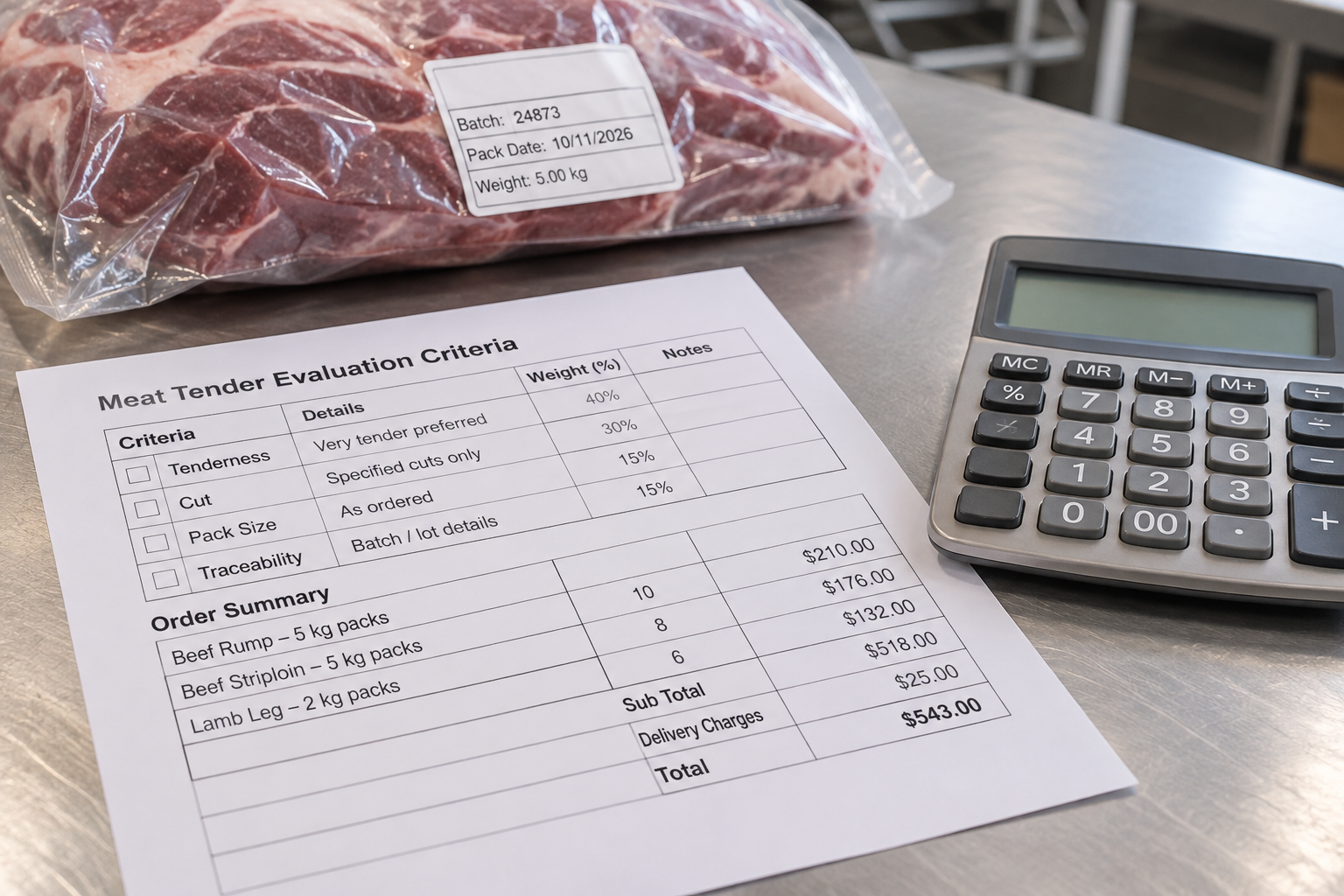
A low unit price is useful only if the offer covers the products and service you actually need. Give every bidder the same pricing template and a common set of estimated quantities. State whether prices include delivery, packaging, surcharges and other relevant costs, and specify how any taxes will be treated in the comparison.
Use a hypothetical example: a buyer requests prices for several cuts across two delivery locations. It multiplies each quoted unit price by the same estimated quantity, adds the stated delivery charges for the same assumed delivery pattern, and compares the resulting totals. Those quantities are an evaluation scenario, not a promise to purchase that volume.
If price is scored using a formula, publish it in advance. One possible method awards the full price score to the lowest compliant evaluated total and gives each other bid a proportionate score: lowest evaluated total divided by that bid's evaluated total, multiplied by the available price points. Check how the formula behaves with your pricing structure and obtain commercial advice where appropriate.
Also describe how you will treat missing prices, conditional offers, unusually low prices and arithmetic errors. Ask bidders to explain proposed price review mechanisms, including the trigger, notice period and supporting information. Evaluate those terms only against criteria disclosed in the tender; do not assume that a fixed price or an index-linked price is automatically best for every buyer.
How Can You Evaluate Welfare, Sustainability and Delivery?
These topics can influence the award, but broad promises are difficult to score consistently. Define the outcome you need, the evidence you will accept and the role it plays in the decision. Consider whether the requirement is a minimum condition, a scored preference or a contract-management commitment.
- Animal welfare: Identify the aspects relevant to your purchase and ask bidders to explain how requirements are applied across the relevant supply chain. Specify any acceptable supporting evidence without assuming a particular label proves every claim.
- Origin and sourcing: State any legitimate origin or provenance needs precisely, and consider whether they are compatible with the rules governing your procurement. Ask how origin information is maintained and communicated.
- Environmental impact: Ask for relevant, comparable information, such as a delivery consolidation plan or packaging approach. Define any methodology and scope before comparing numerical environmental claims.
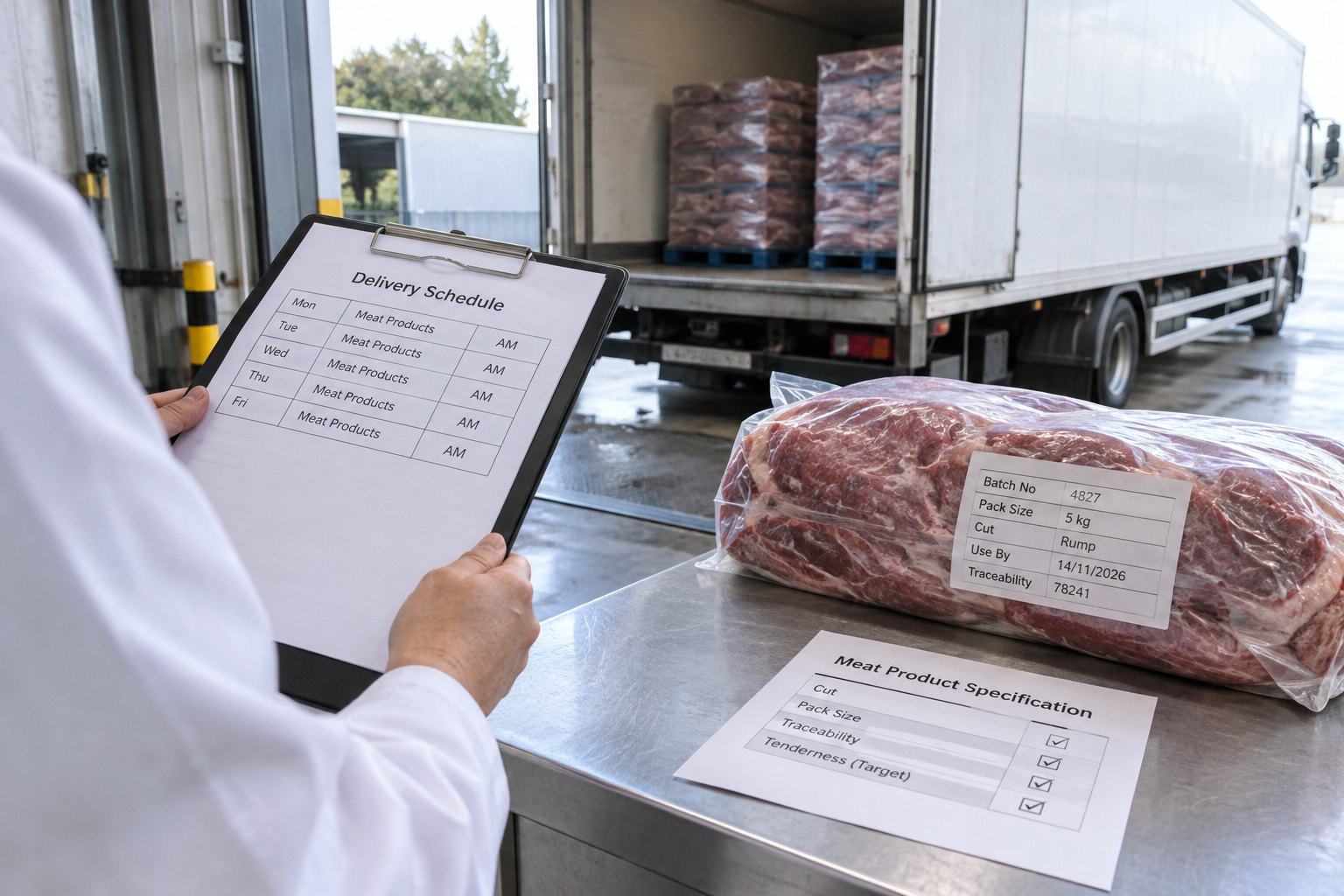
- Delivery continuity: Request a practical plan for vehicle or staffing disruption, product shortages and urgent communications. Look for named responsibilities and realistic alternatives.
For UK animal welfare context, consult GOV.UK animal welfare guidance and check the rules relevant to the species, activity and location. Legal obligations and your additional commercial preferences are not the same thing; make the distinction clear in the tender.
Consider how you will verify commitments after award. A delivery plan may look persuasive on paper, but the contract should also say what information the supplier must report, how issues will be escalated and when performance will be reviewed. Do not award marks for a promise you have no intention or ability to monitor.
How Do You Score Bids and Record the Award?
Agree the process before the deadline. For a sealed tender, keep bids inaccessible until submissions close, then open and assess them under the stated procedure. Check that evaluators understand the scoring rules and disclose any conflicts. If the tender is subject to public procurement or other specific rules, obtain advice on the process and record-keeping obligations that apply.
- Check submissions against mandatory requirements. Record the outcome and the evidence reviewed. Apply the published rules on missing or incomplete information consistently.
- Score the responses. Assess each bid against the published criteria and scoring descriptions. Record the relevant evidence and a reason for each score.
- Moderate differences. Where evaluators disagree, discuss the evidence and agree a recorded consensus score. Do not change the criteria after seeing the bids.
- Apply weights and price calculations. Check arithmetic and confirm that any sub-criteria have been combined as described in the invitation.
- Complete due diligence. Carry out the checks stated in the process, resolve permitted clarifications consistently and document any decision not to proceed.
- Approve and communicate the outcome. Have the authorised decision-maker review the recommendation. Provide feedback and observe any applicable notification or waiting requirements.
As a simple illustration, a quality score of three out of four under a 25% weighting produces 18.75 weighted points: three divided by four, multiplied by 25. Repeat the calculation for each scored criterion and combine it with the price score using the method you published. The highest total is not a substitute for checking mandatory conditions and obtaining the required approval.
Keep the invitation, submitted bids, clarification correspondence, individual and moderated scores, evidence references and award approval in an accessible audit trail. TenderLock supports sealed bidding, evidence-linked evaluation and recorded governance steps; its AI can assist with reviewing responses, while named people remain responsible for decisions.
Video: Evaluating Food Supplier Tenders
For another perspective on the practical steps, search for a demonstration of food supplier evaluation and compare its approach with the criteria and rules in your own tender.
Frequently Asked Questions
Is the cheapest meat supplier always the best choice?
No. The lowest compliant price may be attractive, but it should be considered alongside the published quality and service criteria. A cheaper offer can carry different delivery, specification or commercial terms. Compare like-for-like costs and assess non-price factors using the weightings communicated to every bidder before submission.
Should food safety be pass or fail?
Essential requirements can be pass or fail when the tender clearly states the standard, evidence and consequence of non-compliance. You can also score aspects of a supplier's approach above that minimum, provided the distinction is clear. Avoid awarding duplicate credit for the same evidence under multiple criteria.
Can buyers ask for meat samples?
Yes, samples can help assess relevant product characteristics, provided the process is appropriate to the procurement. Explain the products required, handling arrangements, assessment method and scoring in advance. Apply consistent conditions to bidders and keep a record of the findings and reasons for the scores.
How much evidence should a small supplier provide?
Ask for evidence proportionate to the contract and the risk, while maintaining essential safety and traceability checks. Explain acceptable document types and avoid requesting information you will not use. A smaller supplier may demonstrate capability differently from a larger one, so assess the evidence against the stated requirement rather than company size.
Can AI make the final tender award?
AI can help organise requirements, identify gaps and review responses against evidence, but an authorised person should assess the findings and make the decision. Check source documents, investigate uncertainty and retain the reasons for scores. TenderLock is designed to support this review while keeping final decisions with named people.
Ready to put your criteria into practice? TenderLock lets organisations run their first live tender free, with no card required.